
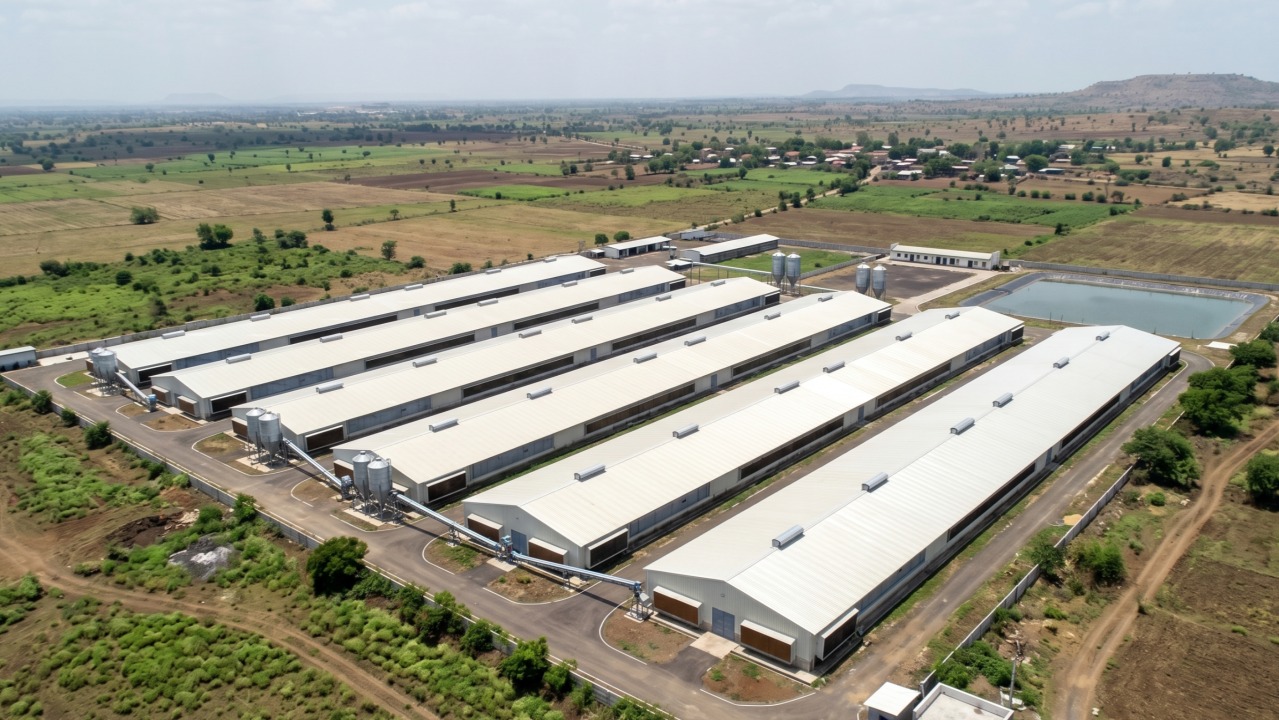
In tropical regions, the poultry industry faces a relentless adversary: environmental heat stress. As ambient temperatures frequently climb beyond the thermoneutral zone of a broiler (typically 18∘C to 25∘C), the biological toll on the birds becomes significant. For commercial poultry farmers, this isn’t just a welfare issue; it is a direct threat to profitability. Environmentally Controlled (EC) sheds have emerged as the scientific gold standard for mitigating these risks.
Chickens are homeothermic, but unlike humans, they lack sweat glands. When the temperature-humidity index (THI) rises, birds rely on evaporative cooling through panting. This process is metabolically expensive. Scientific studies indicate that heat stress leads to respiratory alkalosis, a condition where excessive CO2 is expelled, disrupting the blood’s pH balance. This physiological shift results in reduced bone mineralization, suppressed immune function, and, in extreme cases, multi-organ failure leading to sudden death.
EC sheds utilize a sophisticated “Tunnel Ventilation” system that replaces stagnant, hot air with a continuous, high-velocity breeze. The effectiveness of an EC shed lies in three scientific pillars:
The data is clear: flocks housed in EC sheds consistently show lower mortality rates (often below 3%) compared to open-housed flocks during peak summer. Furthermore, because the birds aren’t spending all their energy on cooling themselves, that energy is diverted back into growth. This leads to a superior Feed Conversion Ratio (FCR) and higher carcass quality.
For the modern farmer, an EC shed is not a luxury—it is a biosecure, climate-resilient fortress that ensures the health of the flock and the stability of the business.
Premium Chick Feeds Pvt. Ltd. has embarked on an inspiring journey since its establishment in 1991 to become one of the largest poultry integration companies in India.
6 Highway Rose,4th floor, 92, Dixit Road, Near Greater Bombay Bank, Vile Parle Mumbai - 400057
401-404 C wing Nyati Millenium, Datta Mandir Chowk, Viman Nagar Pune 411014