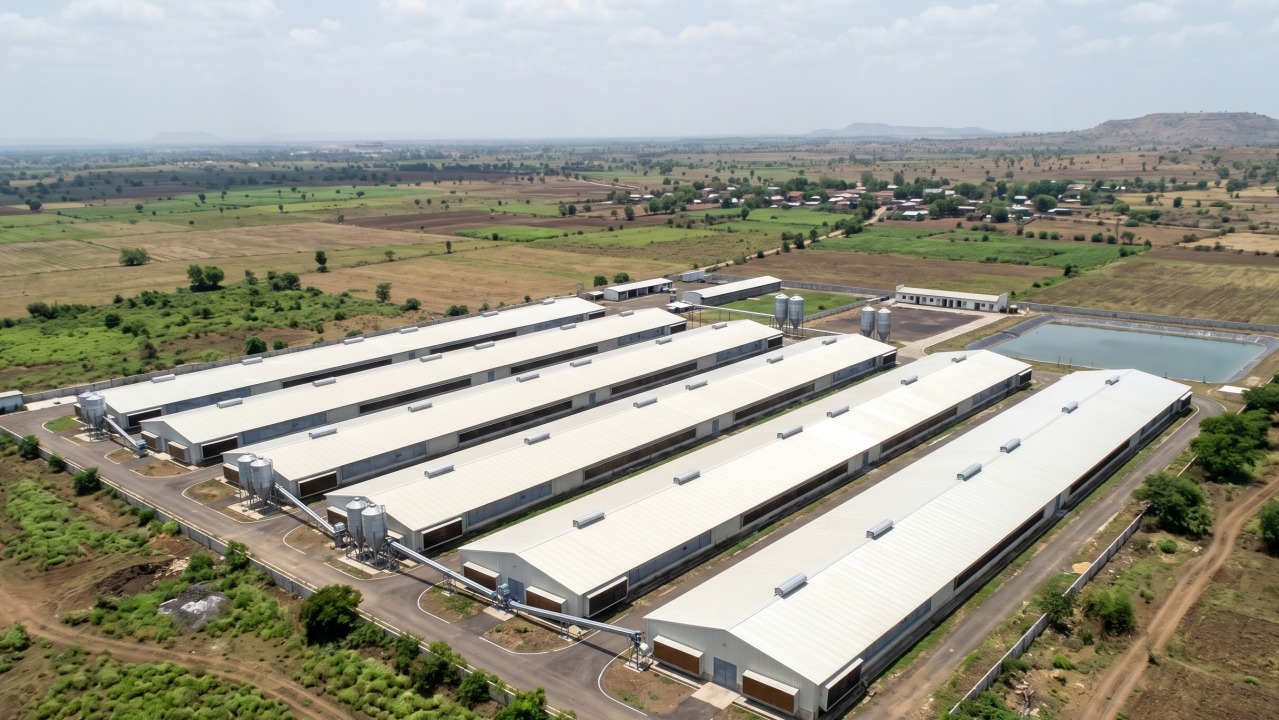
As the poultry industry moves further into 2026, the debate between traditional open-side housing and Environmentally Controlled (EC) sheds has shifted from a question of “preference” to one of “financial survival.” For the modern producer, the initial capital expenditure (CAPEX) for an EC system is significantly higher, but a granular cost-benefit analysis reveals that the long-term operational efficiency far outweighs the starting price tag.
The CAPEX vs. OPEX Reality
Traditional open-side sheds are cheaper to build, requiring minimal mechanical infrastructure. However, they leave the farmer at the mercy of environmental volatility. In contrast, an EC shed requires a substantial investment in automated ventilation, cooling pads, and airtight structural insulation. To determine if this is “worth it,” we must look at the Return on Investment (ROI) driven by biological performance.
Feed Conversion Ratio (FCR) and Growth Velocity
In an open-side shed, birds expend a large percentage of their caloric intake simply to maintain body temperature—either huddling to stay warm or panting to stay cool. This is “wasted” feed. In an EC environment, the climate is locked within the thermoneutral zone. Data from 2025-2026 commercial cycles indicate that EC birds reach market weight (approx. 2.2kg to 2.5kg) 3 to 5 days faster than their open-housed counterparts. When multiplied over 6 to 7 flocks per year, this increased turnover significantly boosts annual revenue.
Mortality and Medication Costs
The economic impact of mortality is two-fold: the loss of the bird and the “sunk cost” of the feed it consumed. Open-side housing frequently sees summer mortality spikes of 10% or higher. EC sheds, by providing a biosecure and filtered air environment, typically keep mortality below 3%. Furthermore, the controlled environment reduces the incidence of respiratory diseases, slashing the expenditure on antibiotics and supportive medications by nearly 40%.
Precision Management
Modern EC sheds are integrated with IoT sensors that monitor ammonia levels, humidity, and CO2 in real-time. This precision eliminates human error. While electricity costs (OPEX) are higher in EC sheds due to fan operation, the cost per kilogram of meat produced is lower because of the sheer volume of healthy, uniform biomass the system generates.
The Bottom Line
The 2026 market rewards consistency. Open-side housing offers low entry costs but high-risk fluctuations. An EC shed is a strategic financial instrument that stabilizes production, ensures predictable yields, and future-proofs the farm against a warming climate. For any producer looking to scale, the transition to EC is not just an upgrade—it is the most logical path to a profitable balance sheet.